


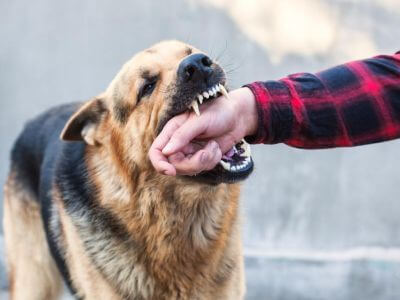
Any dog, regardless of size, breed, or temperament, is capable of biting under certain circumstances. Even the most affectionate and cuddly dogs can resort to biting if they feel threatened or provoked. This doesn’t mean the dog is aggressive or has a history of aggressive behavior.
Underlying Issues and Common Stressors or Triggers for a Dog to Bite May Include:
1. Fear:
Dogs can bite out of fear, perceiving threats in unfamiliar situations. Dogs experience emotions, including anxiety and fear of new places, noises, people, other dogs etc., and react depending on their instinctive tendencies. The role of genetics, negative experiences (environmental), lack of confidence, personality and temperament can determine how they respond either in Fight, Flight, Freeze or Fidget.
2. Possessiveness:
Fan occurs if a dog feels the need to protect their belongings or family members.
3. Food/Resource Guarding:
Some dogs may feel the need to protect their food/beds or even space is threatened.
4. Protective Behavior:
Dogs with protective instincts and may become aggressive if they feel their loved ones or property are in danger.
5. Poor Socialization and Lack of Training:
Lack of exposure to different environments and people can lead to anxiety and aggression without learning coping mechanisms.
6. Provocation:
Actions that annoy or frighten a dog can lead to defensive biting.
7. Frustration:
Dogs can become frustrated if they feel trapped or unable to escape a situation, such as in cases of Redirected aggression when a dog cannot reach the source frustration and instead redirects that aggression towards another target.
8. Pain or Injury:
A dog in pain may bite when touched or approached.
In most cases, a dog bite doesn’t happen without warning. Dogs often provide warning signals, like growling, snapping and tense or frozen posture before escalating to biting.
Understanding and Prevention
To reduce the risk of dog bites, it’s crucial to understand your dog’s behavior. Here are some steps to consider:
1. Observe Body Language:
Pay attention your dog’s signals and reactions in various situations. If you notice any unusual or possibly aggressive behaviors seek professional training assistance.
2. Training:
It’s always best to begin training from puppyhood, focusing on appropriate behaviors and discouraging mouthing. However, even adult dogs benefit from training to curb bad behaviors.
3. Address Possessiveness:
Tackle possessive behaviors early to prevent escalation.
4. Modify Behavior:
If a dog has bitten, prioritize safety by implementing a behavior modification program.
By fostering a deeper understanding of canine behavior and implementing consistent training practices, we can help our dogs feel secure and reduce the likelihood of aggressive encounters.